
Cellular Behavior in Orbit
1U CubeSat • Designed 2025–ongoing • Launch Unknown
Mission Completed
10%
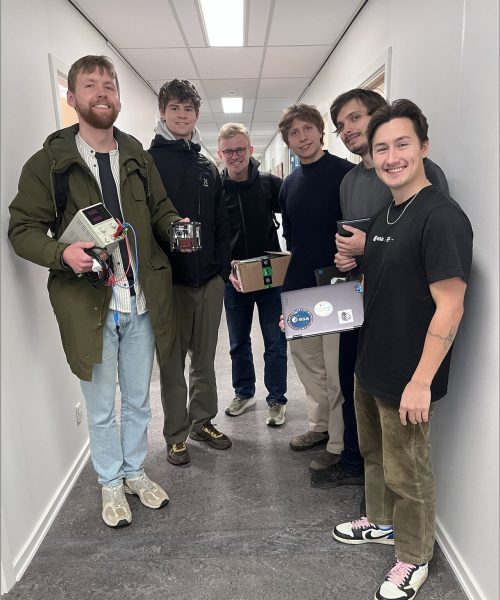
The fourth satellite in the DISCO program was initiated in 2025, with a group of students from Aarhus University collaborating on the goal of developing a 1U CubeSat to study stem cell behavior in microgravity and under exposure to solar radiation.
The purpose of the DISCO-4 mission is to develop and demonstrate a CubeSat capable of supporting and monitoring biological experiments in low Earth orbit. The mission focuses on studying how microgravity and increased radiation affect biological growth processes, with relevance to both space research and biotechnology.
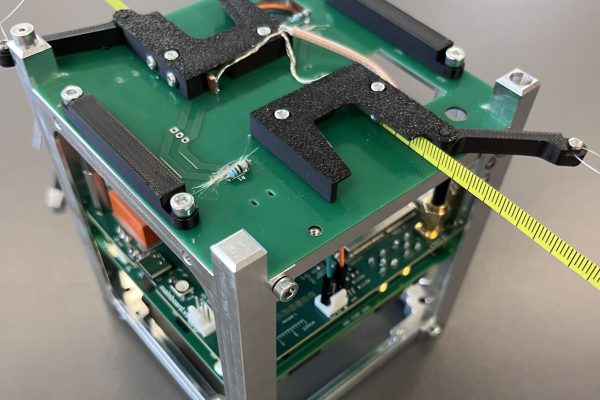
DISCO-4 is a student-built 1U CubeSat developed as part of a university bachelor’s project and continued through master’s-level research.
DISCO-4 carries a biological payload designed to support yeast growth experiments in orbit. The payload supplies yeast cells with sugar and water and monitors their growth under space conditions, serving as a prototype for future stem cell–related research.
DISCO-4 has successfully completed its bachelor-level project phase, with both the satellite bus and payload teams defending their work. Several students will continue developing the mission during their master’s studies, focusing on preparing DISCO-4 for launch. New students will also join the project, further strengthening the team and advancing the mission toward flight readiness.
DISCO-4 represents a major step forward in student-driven space life science research. The mission’s payload report was highlighted by the examiner as exemplary and is recommended as a reference for future students. Several team members will continue developing DISCO-4 toward launch, while new students will join the project to further strengthen the mission.

Other Missions?